
If you wish to find out more about the best laptops for 3DS Max then continue reading my article. The importance of software in this day and age cannot be overemphasized. Software is birthed almost every day. Well despite that being the fact one has to make sure they do not settle for anything less. Software is almost at every corner but getting the best is not the easiest thing if you do not have the right knowledge.
Anyway, if you fall into the category of not having knowledge, do not worry all you need is here, so stay here with me. As I offload it all and give it all to you in just a blink of an eye.
3Ds Max is one of the best software you can consider when doing your 3D work, it always delivers and never disappoints. It is smart and very glamorous. It does your work efficiently and still gives you that glam touch.
Software is like that heat to your cooking process; you cannot do without it. It has the potency to make programs work. With the software, you are able to run different activities on your laptop with so much ease and direction.
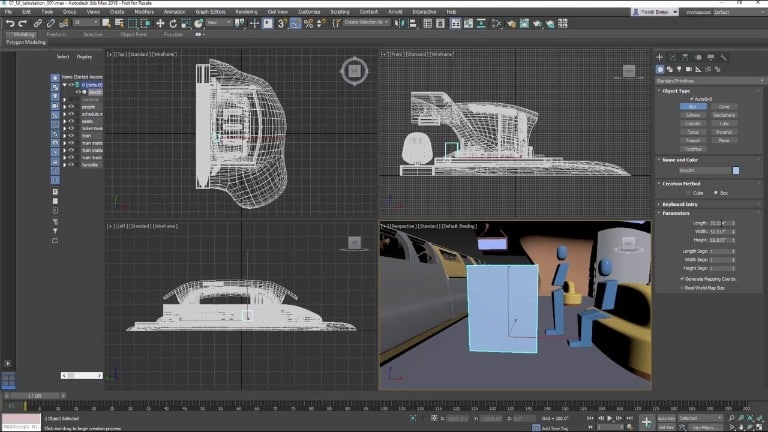
By the way, 3Ds is a powerful 3D animation, rendering, and modelling program and it is very popular in realistic 3D modeling, as well as in the architectural visualization industry. And it is very common among game developers, they love this thing and understand it very well.
Imagine what would be of you or what you would do would a brain. Like can you even survive without? Now imagine a laptop or computer without software, like it cannot even work, it can’t happen it can’t!
At the genesis of this writing, I mentioned 3Ds max and this is a software we are looking at today. This is our meal for the day and we are going to feast on it and enjoy it. We are looking at the best laptops on the market with 3Ds, I am guessing you are as excited as I am. I will adequately feed you by proving you with 8 products not only products but the best of products on the market.
It would be awesome if I explained to you the benefits of 3Ds but hey let us review the products, I will do that at the end of the report, for now, buckle up and let’s do!
- HP Omen 15
- HP Pavilion 15-cx0056WM
- Acer Predator Triton 900
- Gigabyte Aero 15 Xa-9us51305p
- Prostar P950rf
- Microsoft Surface Book 2
- MSI We 738sj -078
- Dell XPS 950-7996slv-pus
Top 8 Best Laptops To Use With 3ds Max Reviewed – 2020 Buying Gude
1. HP Omen 15
 With this laptop nothing can hold you back, it is very powerful and portable. It keeps on moving and improving with its desk class graphics great performance and upgradability to mention but a few. Just its design is able to propel you forward.
It has a new fan design with very larger blades and it helps you cool down things.so even when the game you are playing gets very heated up your laptop will still remain cool and it is equipped with a dynamic bearing that improves heat dissipation.
It has the latest gaming technologies with NVIDIA. It also has graphics that make your experience as real as it can be. And with this, you can play the latest games ant any place and at any time.
Not to forget that HP OMEN 15 has a bios recovery and protection platform that automatically checks the well-being or health of your laptop and it is also able to protect your laptop against unauthorized access and secures your laptop from any form of harm.
It has a very sweet and amazing battery life. It can last for about 4hours and 30 minutes when you are doing a lot of things at once and if you are apparently live streaming it can only go up to 2 hours 45minutes
Features:
Display 15.6, full HD 1920×1080,144Hz ,128, RAM 16GB DDR4, OS windows 10 home, battery 70Wh ,4-cell, dimensions 360x263x25.9mm, weight is 2.41kg, mainboard is Intel canon lake HM370.
Specifications:
CPU Intel Core i7-9750H, GPU NVIDIA GeForce GTX 1660, audio jack, card reader.
2. HP Pavilion 15-cx0056WM

 It has a touch screen functionality and that makes it very unique. Its pavilion power is available with three display options. It can actually run Revit without any lags .it is efficient and smooth throughout and it also comes with the Intel HD Graphics 630 and its GPU is enough for your workflow.
It is very dependable and is able to handle all modern games and its case has been designed with great benefits. Additionally, it is a low budget to run Revit but it has a full HD display and its display makes the laptop even more interesting because it gives clear pictures and good detail.
Read also: Best Laptops For Engineering Students
Did you know that other than running 3ds max it can be used for gaming? but it does not have an optical drive and has not embraced the visual aesthetics of a gaming laptop It only happens when one opens the laptop, that is the only time the keyboard backlights glare back.
Features:
Processor intel core i5-8300H processor, RAM 8GB, connectivity and ports 1-USB Type C port, battery life is up to 7 hours.
Specification:
Graphics dedicated, NVIDIA GeForce 1050Ti, screen 15.6 inch ,1920×1080, IPS.
3. Acer Predator Triton 900
 It is a very gorgeous laptop with about 17.3 -inch that is able to float above the chassis. You can use it for your gaming and also running 3ds max without any trouble. Funny but its design mirrors a drawing surface but sadly it does not support active styluses.
But even before we go any further it’s vital for you to know that this laptop is quite pricy. So, check your pockets and weigh yourself. It’s worth your money, it has so much value and you will not be making a mistake by purchasing it.
Now this here is my favorite aspect of ACER predator triton 900. Its keyboard has macro keys and even user program short cuts. You can assign a button to do some things for you, you can simply assign a button to launch an installed up or even increase the fan speed and even more and you can just twerk some settings to suit your liking.
Features:
CPU intel core i7-9750H 6-core processor, display size 15.6, display resolution 1920×1080, RAM 16GB DDR4, dimensions 14.11×10.04×0.7inches.
Specifications:
GPU NVIDIA GeForce RTX 2060 Graphics, 6GB dedicated GDDR6, storage 512 GB, OPERATING SYSTEM IS WINDOWS 10, ports 1Thunderbolt 3, 4.41 pounds.
4. Gigabyte Aero 15 Xa-9us51305p

 This laptop is modern light and very thin. It is there to provide you to great value and it has Microsoft modern pc certification approval, it is not only light but it is chassis and has a platform for instant power on. It gives your ability to experience all operating fluidity.
Do not be deceived despite being light it still remains one of the strongest laptops you can find on the market. It has all data preferences you may think of, it gives you nothing but the best there is.
And your windows hello has been equipped with a fingerprint sensor that gives you enough room for privacy making sure you are guarded and protected and you can leave your laptop anywhere without fear of someone going through your materials.
Meanwhile, a compatibility test has been carried out to make sure you have a great and memorial experience in whatever you may be working on. You will need this laptop sooner than you thought. And do not worry about viruses it has a killer module and with killer e2600 internet chip and killer AX1650.
Features:
CPU intel core i9-9980hk, display 15.6 inches AMOLED display, storage space M.2NVMe.
Specifications:
NVIDIA GeForce RTX 2070, max design GDDR6 8GB, display resolution, RAM 16GB DDR4 2666 MHz Samsung DRAM module windows 10 pro,4.4pounds.
5. Prostar P950rf

 With a massive change in the capability in graphics it has been beautifully equipped to easily capture your mind at any point. It has been built with RTX that traces light paths to create thicker smoother and richer materials.
It is very lit and has been customized with a gaming macro color backlit keyboard and you can customize the look and put the tone you desire with a very rich and vibrant color LED backlight keyboard; you can also set all 3 same /uniform color for that dramatic effect.
You and I both know that effective and efficient gameplay depends on very powerful and good sound. With this laptop, you are able to amplify an immersive experience with very lively audio and you can use auditory cues to sense the hidden movements of your enemies. Its speakers will provide you with a very strong sound.
Features:
CPU 9th generation intel core i7-9750 H processor, Full HD 1920X1080, operating system is windows 10, storage space is 500 GB.
Specification:
Display size 15.6, GPU NVIDIA GeForce RTX 2070 with 8GB GDDR6, RAM 16GB DDR4 2666MhZ, weight is 4.6lbs.
6. Microsoft Surface Book 2

 It is strong and has a very fast performance its speed has been increased and you will not lag behind in any way with your activities. Another aspect to take note of is that it has a razor-sharp resolution with a touch screen that has been enabled.
Created with a refined premium design that has a fast performance, it is portable too. Equipped with the latest and best processor there is which is the 10th generation of intel core i7. It also has everything that is required to live stream videos. Now imagine having 11.5 hours of battery life in a day, meaning you are sorted out especially if you do no love carrying your power pack around.
Its memory is a breath of fresh air. It is good enough to cater for all your storage.
This laptop will sweep you off your feet and it will satisfy you with its two types of amazing surface three laptops. Not forgetting that it has enough RAM which is able to handle any task you may need to do.
Features:
The processor is 10th gen intel core i7or i5, hard drive is 256GB SSD, graphics is Intel Iris plus graphics.
Specifications:
Weight is 2.8 pounds, battery life is 11.5 display is 13.5-inch pixel sense display, RAM is 16GB.
7.MSI WE72 7RJ-1032US

 It is a mobile work station laptop but its battery life is not good. It is only about 3 hours and that is not much. If you are one that uses your laptop a lot while on the move, it is very vital to always travel with your powerpack least the laptop leaves you in shock, please be prepared every time.
The only weakness of this laptop is its battery life, anyway, let us forge ahead. It is a very good machine – for multitasking and makes sure you do not lag behind in any way. You can multitask and still be excellent in all the activities you are conducting. It has a matrix display support system that gives you an opportunity to simultaneously use up to two Good laptops for Mechanical Engineers.
It has been built with amazing cooling technology, don’t worry about heating or overheating it has already been taken care of, now you see just how good this baby is despite its short battery life. Not to forget that it has fast processing speed and will keep you in time according to how much time you have set to get your work done, by the way despite having a very heavy workload it cannot crack down for it has been suitably equipped for any kind of work both light and heavy.
Its screen is good for your animation and is able to give you very clear and sharp images without dimming at any point.
Features:
Processor intel core i7-8750H processor, RAM 16GB, storage 256 GB SSD.
Specifications:
Graphics dedicated NVIDIA Quadro p2000, screen 17.3 inches,1920×1080 IPS, battery life is up to 3hours.
8. Dell XPS 950-7996slv-pus
 It is a very huge powerhouse performance and it is super speed and it is one of the best of the best laptops with amazing speed. It has been equipped with the latest 7th Gen Intel quad-core processors and its graphic card is spot on.
Did you ever think that this laptop would have a killer 1535 wireless -AC adapter that provides a strong and very reliable Wi-Fi connection, it is able to automatically detect, classify and even prioritize network traffic thereby making sure that your most essential data comes first over applications that may be less important, it is also equipped to deliver critical packets in the shortest possible time and eliminates lad and latency.
You are able to interact intuitively .what I mean is you are able to zoom, pinch or even click with confidence, its precision touchpad is there to prevent floating and jumping cursors, it also has accidental activation prevention that has the ability to cease unintentional clicks incase your palm hits the touchpad by mistake.
It has a thunderbolt 3 multi-use port that enhances speed and gives you a platform to charge your laptop, you can also connect to multiple devices and also do data transfers with any traffic. It goes on to have a standard backlit keyboard that illuminates your keys and they sparkle, especially at a point when you choose to work in a room that has zero or very low light.
For that durable and chassis elegant design it has, it has been made from a block of aluminum and it keeps very sturdy, well not only aluminum has been used to construct this laptop other materials have been used as well but aluminum stands out.
Features:
CPU 8th generation intel core i7-8750H, GPU NVIDIA GeForce GTX 1050 Ti max, display 15.6-inch 1920×1080 IPS non-touch screen with anti-reflective coating
Specifications:
Storage is 256GB Toshiba NVMe drive, battery life is 97 watt-hours
Now that you have seen each product for yourself, there is a need to know what is required for you to have an excellent and smooth ride with 3Ds max. Therefore, below I unveil some of the things required for a laptop that can smoothly run 3Ds max without causing any problems or complications.
Buying Guide For The 8 Best Laptops To Use With 3ds Max
Processor
A CPU is one thing that cannot be overlooked, it is a necessity and must be inbuilt in your laptop for 3ds to run moreover many tasks on 3ds depend on it. And a higher frequency of CPU core is very good for 3ds max than a CPU that may have a lower frequency. Rendering is one of the activities that one can run on their laptop and it requires even more cores than the actual that may be required, therefore it is very important to make sure this is just the right amount and is present. Specialists advise that you at least use an 8th generation intel core i5 processor but in a case where you are working on a project that is complex or complicated activity you can go for an i7.
RAM (Random access memory)
In most cases, the amount of RAM required usually depends on the kind of project being done. And since our agenda for the day is 3ds, the minimum memory that is required for one to use a 3ds max is 4GB RAM whereas the memory suggested is 8GB and if you will also be working on big projects you can consider 16GB. For instance, high-resolution rendering is quite complex and to do that you would at least have to settle for a laptop that has 32GB of RAM.
Related article: Good laptops for Mechanical Engineers.
STORAGExperts recommend that you use an SSD as a primary drive. It has a very high speed that allows you to launch load files, launch applications and it gives your system the potency to boot very fast than any other hard drive would do. And to have Good laptops for Mechanical Engineers installed on your laptop, you will need about 6GB free disk space.
GPU (Graphics Processing Unit)
One of the main components to consider in a laptop for 3ds max is its graphics card. For instance, when you want to animate models in 3ds max, it is the responsibility of the graphics card to take note of how many frames per second the viewer is able to display on the model. Powerful graphics give you an even smoother experience.
Display
When you looking at optional performance, it is advised that you at least use a 15inch laptop that has a full HD display. If you are using a small display, it is not easy to see the details of the mode you may be working on. And you can also use a high resolution unless you are using an external display that is big otherwise high resolution is very suitable. But for even better colors and viewing angles you can try out an IPS display.
Now you see in as much as the above looked so simple and not complicated, you should not by any means neglect what makes your Laptop in running 3ds a success.
What then now? that you have all the necessary information on what to look out for when buying the best laptops for 3D modeling and rendering. You are more than safe and can stand on your own, don’t hesitate to understand these and to understand them very well.
OOPS! MAKE YOUR CHOICE! GOOD LUCK, YOU SURELY NEED IT