
Share on twitter
Share on email
Share on whatsapp
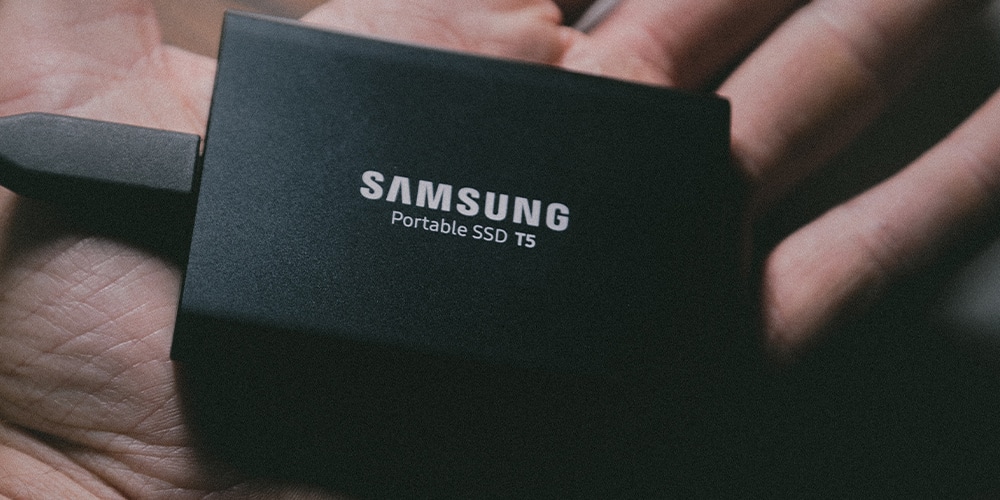
Many computers can achieve high and reliable performance, but some users keep feeling like more speed and storage capability will do the difference. Here is where an external SSD drive does its magic.
First, do you know what an SSD is? The storage device of a computer is one of the main reasons why your computer is too fast or too slow, and there are two types of those: Hard Disk Drive or HDD and Solid State Drive or SSD. The storage device keeps large amounts of data and it’s able to access them in aleatory, which means they can be written and read in any order. It is really important because it stores information from the operating system to applications and general data of the user.
Every computer comes with a storage device included, whether it is a laptop or a desktop, but sometimes an extra storage capability is necessary and this is when we look for an external storage device.
Main differences between a HDD and a SSD
Here I’ll show some main differences between HDD and SSD, so you can understand better which will give you a major and faster development.
Capacity
SSD usually have from 256 GB to 4 TB digital storage capacity, while HDDs can go up from 1 to 10 TB.
Energy consumption
SSD has a much lower range than HDD, since it has NAND technology with a lower consumption rate
Noise
SSD makes no noise while HDD can get really noisy because of its rotational parts.
Vibrations
SSD doesn’t vibrate while the mobile disks of HDD generate slight vibrations.
Fragmentation
SSD doesn’t have, but HDD can get to those.
Durability
SSD cells can be rewritten a limited number of times while HDD mechanical parts that can be damaged by movement.
Starting time
SSD can use 7 seconds and HDD 16 seconds.
Data transfer
In general, SSD can transfer from 200 to 550 MB/s, while HDD can go from 50 to 150 MB/s.
Magnetism affection
SSD has no affection, but in HDD it can permanently remove data.
Why is it important to have an external SSD?
Having an external SSD is ensuring your data. SSD are highly reliable and they usually deliver a nice development with the computer. Here are some reasons why you should get one.
- Using an SSD external hard drive, you will access your files way much faster.
SSD are even 10 times faster than HDD, so you won’t only be accessing faster but also transferring the data into them. They are perfect for storing large files such as 4k quality videos, movies, music, high resolution photos or personal backups. - You can use them to save and run video games.
SSDs are special for gamers, these are recommended for Xbox One and PlayStation 4. It will definitely improve your gaming experience. - It serves to store and transfer information safely.
Its solid structure makes it highly resistant to falls, shocks and accidents and it also usually has security encryption to keep your personal information safe. - It has low power consumption and works quietly.
The SSD is a non-volatile memory, needing no heat to work it’ll keep consumption low. - They are designed to last for many years, sometimes even more than a decade.
SSDs are built with high quality materials and the newest technology, looking for giving the largest life expectancy possible.
Top 9 Best External SSD
In the matter of getting an external solid state drive, I have come up with a top 9 of the best SSD external storage devices so you can choose the one than fits your needs and budget, and here it is:
- Seagate Expansion SSD 500 GB.
- WD 500 GB My Passport Go SSD.
- Seagate Barracuda Fast SSD 500 GB.
- SanDisk 1 TB Extreme PRO Portable External SSD.
- SAMSUNG T7 Portable SSD 1 TB.
- WD 1 TB My Passport SSD.
- Sabrent Rocket Nano 2 TB External Aluminum SSD.
- VectoTech Rapid 4 TB External SSD.
- Silicon Power 1 TB 3D NAND TLC Rugged SSD.
Read now all of their features, specifications, pros and cons.
1. Seagate Expansion SSD 500GB Solid State Drive
No products found.Amazon has this cool SSD 500GB for $75. This is a cheap SSD with a high-speed performance, it is also portable and it’s perfect for streaming stored videos to the laptop, for scrolling through photos and for backing up content.
Features
Seagate is the brand of this SSD drive. It is compatible with PCs, laptops and Macs. It’s digital storage capacity is 500 GB. It’s hardware interface is USB 3.0 and it is able to transfer data at 400 MB/s.
Specifications
The SSD comes in black and silver. It is lightweight and has a minimalist design to carry it with ease in busy days of work. The package includes an USB cable that works nicely with Windows and Mac laptops. The device dimensions are 5.95 x 4.25 x 1.75 inches, weighing 2.24 ounces. The product has a three-year limited warranty.
Pros
- It is small, perfect to carry around
- It works quietly
- It works really nice with Xbox One
Cons
- The cable is too short
2. WD 500GB My Passport Go SSD Cobalt Portable External Storage
No products found.Amazon has this 500 GB SSD drive for $80. This device has high reliability and it works 2.5x faster than most portable storage devices, making it an PS4 SSD.
Features
Western Digital is the brand that has created this equipment. It is compatible with Windows and Mac devices. It’s dig storage capacity is 500 GB. The hardware interfaces of this SSD are USB 3.0 and USB 2.0. It’s read and write speed goes up to 400 MB/s.
Specifications
This one comes in amber and cobalt colors and it’s drop-resistant up to 2 meters, with a rubber protective bumper to protect it even while the drive is plugged in. It is pocket-sized and has a built-in cable for convenient portability. It has an auto backup system and Western Digital gives it a 3-year limited warranty. The dimensions of this SSD are 3.7 x 2.6 x 0.39 inches, weighing 1.94 ounces.
Pros
- It has an integrated USB cable
- It is light and pocketable
- It has impact resistance, perfect for travel
- It is compatible with PlayStation 4 and Xbox One, One S, and One X
Cons
- It comes with no USB Type-C adapter included
- It gives a below-average performance
3. Seagate Barracuda Fast SSD 500GB External Solid State Drive Portable
No products found.The Barracuda SSD is available on Amazon for $90. This external storage device will let you install games, transfer files and stream stored videos faster and seamlessly.
Features
The Brand is Seagate. This 500 GB SSD is compatible with laptops, Pcs and Mac devices. Its digital storage capacity is 500 GB and the hardware interface is the USB 3.0. The SSD can transfer data (read/write) up to 540 MB/s.
Specifications
This small equipment has a weight of 6.7 ounces and its dimensions are 0.36 x 3.11 x 3.68 inches. It has a plastic black body with a minimalist design and a sleek, green LED accent light. It comes with a reversible USB-C cable included. The product has a one-year limited protection plan. It has backup and mirroring software, Type-C cable (18 in), Type-C to Type-A cable (18 in) and a quick start guide.
https://www.youtube.com/watch?v=m59Z61cNBMk
Pros
- It has easy backup and syncing
- It gives a reliable performance
- It is compatible with Xbox and PlayStation
- It comes with a reversible USB-C cable
- It has an attractive design
- It is lightweight and portable
Cons
- It has poor build quality
- It’s expensive
- Its USB cable isn’t high quality
4. SanDisk 1TB Extreme PRO Portable External SSD
No products found.The Extreme Pro 1TB SSD has a price of $190 and you can find it easily on the Amazon platform. This is a compact storage device, comfortable to carry around. Highlight of this product: even though it is a bit expensive, it is dust and water resistant so it can last for a long time.
Features
SanDisk is the company responsible for the creation of this portable external SSD. It is compatible with laptops, Pcs and Macs devices. Its digital storage capacity is 1 TB. The hardware interfaces are USB 3.1 Type A and USB 3.1 Type C. Its read speed is 1050MB/s and its write speed is a bit lower than that.
Specifications
This 1TB SSD drive has a ruggedized design with an aluminum body which helps to dissipate heat, in a pocket-size. Its IP55 makes it water and dust resistant, so this is a highly durable storage device. Its silicon rubber coating also gives it high impact resistance. It comes with an amazing 5-year limited warranty. Its dimensions are 4.34 x 2.26 x 0.40 inches and it weighs 5.6 ounces.
Pros
- It has a compact, pocket-sized design
- It is strong and durable
- It is water, dust and impact resistant
- It delivers a blazing-fast performance
Cons
- It’s expensive
- The dust and dirt stick to its outside
- Its USB port is exposed, so it isn’t that rugged
- It has no activity light
- Its cables are short
5. SAMSUNG T7 Portable SSD 1TB
No products found.This SSD drive 1TB is available for $160 on Amazon. It allows you to transfer files almost 9.5 times faster than usual external storage devices. This device is recommended for creators, gamers (we are talking about an PS5 SSD) and students.
Features
Samsung is the company in charge of this SSD. Its compatible devices are laptops, desktops, televisions, Android phones and Macs. The digital storage capacity of this storage device is 1 TB. The hardware interface is USB 3.2 gen 2. Its reading speed is 1050MB/s and its writing speed is 1000 MB/s.
Specifications
The SSD comes in blue, gray and red colors. Its dimensions are 3.3 x 2.2 x 0.3 inches and its weight is 2.08 ounces. The Samsung T7 is shock-resistant and withstands drops from 6ft. Its Dynamic Thermal Guard (DTG) technology protects the T7 from overheating by automatically slowing down data transfer if necessary. It comes with the password security and a three-year warranty.
Samsung recommends to download the latest firmware update through the included Portable SSD Software 1.0 to ensure the best performance. The package includes: USB Type-C to C cable and USB Type C-to-A cable.
Pros
- It has amazing multi-device compatibility
- It works with Xbox Series X, Xbox One and PS5
- It comes in a compact size
- It delivers a fast performance
Cons
- It is expensive
- It has no IP rating
6. WD 1TB My Passport SSD External Portable Drive
No products found.The WD 1 TB external SSD has a price of $170 and you can find it in the Amazon platform. It is really easy to use, it comes with a backup system and it is lightweight and comfortable to carry.
Features
Western Digital is the company that has delivered this SSD. It is compatible with laptops, PCs and Macs devices. Its digital storage capacity is 1024 GB or 1 TB. The hardware interfaces of this SSD are USB Type-C and USB 3.1 Gen 2, which come within the package, but it is also compatible with USB 3.0, USB 2.0 and USB-A. Its reading speed runs up to 540 MB/s.
Specifications
This SSD has password protection with hardware encryption. It comes with WD Discovery software for WD Backup, WD Security, Social Media and Cloud Storage import and WD Drive Utilities. It has automatic backup, which is really useful. This 1 TB SSD was designed to withstand a drop up to 6.5 feet (1.98 m). Its dimensions are 3.5 x 1.8 x 0.39 inches and it weighs 1.44 ounces.
Pros
- It is easy to use
- It has a compact size and its lightweight
- It comes with a backup software system
Cons
- It isn’t so fast when it comes to copying large files
- Its duo-tone design isn’t so attractive
- Its Gen 2 speed benefit is minimal
- It has unwelcome sales in WD Discovery app
7. Sabrent Rocket Nano 2TB External Aluminum SSD
No products found.This 2TB SSD costs $300 on Amazon. It is capable of running 9 times faster than traditional external HDDs. It will help you in a variety of uses such as transferring and backing large data files and 4K videos within a few seconds.
Features
Its fabricant brand is Sabrent and this SSD is compatible with laptops, PCs and Mac devices. The hardware interface of this 2 TB SSD is USB 3.2. It has a reading/writing speed of 1000 MB/s.
Specifications
The SSD 2TB complies with trim and UASP, and its firmware is upgradable. The OS is independent and it is fully bus powered with no drivers required. It has an ultra slim aluminum alloy sandblasted shell. Its package contents: The external aluminum SSD, 8″ USB Type-C to Type-C cable, 12″ USB Type-A to Type-C cable and the user manual. Its enclosure is designed to absorb the heat and protect the SSD from overheating, giving you a long life expectancy from your drive. Its dimensions are 4.13 x 1.77 x 0.55 inches weighing 6.4 ounces. It also comes in black, gray, blue, red, pink and gold colors.
Pros
- It is sleek, durable, and convenient
- It is easy to set up
- Its packaging is great
- It has nice compatibility
- It delivers a really fast development
Cons
- It gets way too hot and its performance degrades with continued use
8. VectoTech Rapid 4TB External SSD USB-C Portable Solid State Drive
No products found.This is the largest SSD in our top 9. The VectoTech 4TB SSD has a price of $590 on the Amazon platform. This amazing storage device will let you transfer conveniently large files, 4K videos, high end gaming in seconds. We think this is a highly recommended external SSD for photographers in general. The USB 3.1 Gen 2 interface (Type-C connection) and its 3D NAND technology, the VectoTech portable SSD provides transfer speeds 5 times faster than conventional HDDs.
Features
VectoTech is the company responsible for this creation. The compatible devices of this SSD are gaming consoles, smartphones, laptops, PCs and Macs. Its digital storage capacity is 4 TB. Its hardware interface is USB and USB 3.1 Type C and it is able to transfer data up to 540 MB/s.
Specifications
This device weighs 4 ounces, its dimensions are 4.5 x 3.2 x 0.5 inches and it comes in color black. It comes with USB Type C to C and USB Type C to A cables, making it ideal for older and newer computers. It is made out of durable aluminum 1050 grade, giving it resistance to minor scratches, while providing ideal heat dissipation. It is also shock and vibration resistant up to 1500g at 0.5 m/sec (6-feet drop). It is capable of withstanding operating temperatures from -25ºc to 85 ºc. It has a 3-years manufacturer warranty.
Pros
- It is compatible with XBOX and PS4
- It is lightweight to carry around
- It has impact resistance
- It delivers a high speed performance
- It has nice build quality
- It is reliable
- It is easy to use
Cons
- It is really expensive
- It has an unattractive design
9. Silicon Power 1TB 3D NAND TLC Rugged Portable External SSD
No products found.This SSD is available for $110 on Amazon. The Silicon Power SSD 1TB is ideal for gaming enthusiasts of Xbox One, Xbox 360, PS4, PS4 Pro and PS4 Slim.
Features
Its brand is Silicon Power, it is compatible with gaming consoles, laptops, PCs and Mac devices. Its digital storage capacity is 1 TB. Its hardware interfaces are USB and USB 3.0. It is capable of a reading speed of 520 MB/s and a writing speed of 420 MB/s.
Specifications
The package includes USB Type C to C and USB Type C to A cables. The SSD has a 3-year warranty. It has a lightweight and durable aluminum shockproof design for traveling safe and comfortable. This sturdy aluminum casing with scratch-resistant surface has a LED indicator to recognize the connection and transferring status. Its dimensions are 7.87 x 5.12 x 1.18 inches and weighs 6 ounces.
Pros
-
It’s Ideal for gamers
- It is affordable
- It is a good replacement for massive secondary storage
Cons
- It could have a better performance
- It isn’t the best choice in the market within price range
- It has simple software
FAQ
Why are SSD more expensive?
There are many reasons why these kinds of storage devices are more expensive.
First of all, because they handle NAND flash memory, which main feature is they don’t need electric energy to store data, but NAND doesn’t count with a large life expectation and increasing it is a sophisticated and expensive process. Second, accomplishing the stability and compatibility of NAND, driver and firmware structure is also an expensive process. Third, as this is a relatively new technology, it still has a low demand and this increases its price ranges.
However, there is good news for all of us. The SSD prices will go down as they have been since its invention. The demand will keep rising and so will its production and offer; its manufacturing processes will keep automatizing, making them more affordable; its components will be more reliable and the tests will be less necessary.
In summary, SSD are more expensive because they are more complicated to fabricate, but in the future it will be much more affordable for all of us.
Are SSD external drives better than HDDs?
An SSD will be faster, lighter and less power-hungry, however an HDD drive will be cheaper but slower than an SSD. I’m not going to lie, the truth is that HDDs are good for storing lots of data since they usually have a high capacity, but if you can afford a high capacity SSD, don’t even think about it and go get it, I assure you your computer will be thankful.
https://www.youtube.com/watch?v=j84eEjP-RL4
Table of Contents
As an Amazon Associate I earn from qualifying purchases