
If you are a Stock trader, it’s vital you go through our guide for the best laptops for stock trading. Stock trading is the process of buying and selling shares in a particular company, and having possession of stock simply means you own a piece of the company. A stock trader can be an agent or stockbroker who sells and buys shares in a particular company via the stock market, referred to as the stock exchange.
It is a popular way of investing your money, which has its pros and cons. Earning money can be done when investors are well and able to manage the risks of stock trading and secure their financial position and earn money.
Best Laptops for Stock Trading 2022 Compared
There are benefits of stock trading and let us quickly have a look at them so that you know why traders actually engage in stock trading. Stock trading brings:
There are benefits of stock trading, and let us quickly have a look at them so that you know why traders actually engage in stock trading. Stock trading brings:
Investment gains: Stock trading offers the trader an opportunity to grow their money, which is achieved through the daily rising and falling of prices of individual stocks. Good profits can be made when traders invest in stable companies that have the ability to grow and make a profit. Also, investors can make a profit by opting to invest in many stocks available. These help build one’s wealth by leveraging growth in different sectors of the economy, resulting thus in a profit, despite the fact some owned stocks may lose value.
Dividend Income: Another way for investors to make a profit is via stocks offered in the form of dividends. Not all stocks, however, are dividends. Investors through dividends receive annual payments that arrive regardless of the stock losing value and represent income on top of any profits that come from selling the stock. The benefits of dividends are that, if you are retired, they can help fund you or even pay for more investing whilst you grow your investment status over time.
Diversification: This offers many benefits to the stock traders who opt to put their money into different types of investment products available. With diversification, the stock market investments change value independently of other forms of investment like bonds and real estate. Stock traders take note of the risks that stocks add to one’s portfolio and also the beneficial potential for large, rapid gains. This thus helps the investors in avoiding any possible risks or overly conservative investment strategies, thus making stock trading a great investment venture.
Ownership: With stock trading, ownership of shares in a particular company of interest comes by buying. This is ownership of a stake in the company of interest and this, therefore, means that investing in the stock market thus brings benefits that are part of being one’s business owner. With Ownership, shareholders vote on corporate board members and certain business decisions. Shareholders receive annual reports enabling them to learn more about the company, and the benefits of owning stock enable you to express loyalty as well as tie your personal finances to the success of the business as a whole.
As you can see, just getting the best trading laptop is not enough to succeed in this world of investing. Stock trading is thus an interesting adventure for business-minded people, and it is a great way to help raise income.
Having tackled that, why not have a look at the best laptop for trading stocks available now?
Top 8 Best Laptops for Stock Trading For 2022
- Apple MacBook Air
- Lenovo ThinkPad E15
- ASUS ZenBook Flip 13
- Dell Inspiron 3000
- Lenovo IdeaPad 5
- Acer Aspire 5
- HP Pavilion 15
- ASUS VivoBook 15
- Acer Swift 5
- LG Gram 14Z90P
Let us have a look at each one of them in detail.
1. Apple MacBook Air
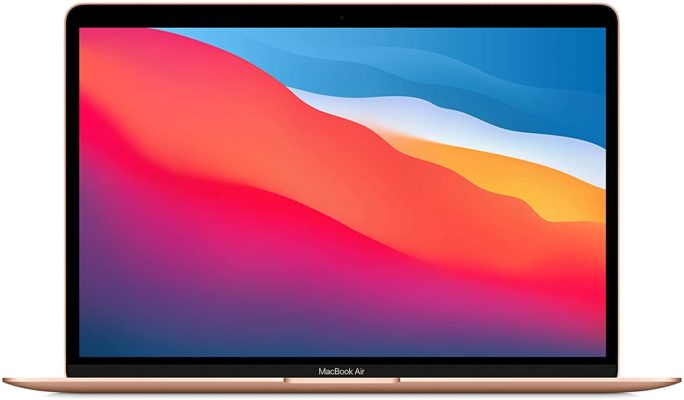
The first stock trading computer of our list is available on Amazon platform for $950. It was originally introduced in 2008. The MacBook Air is thin and light than almost any other Apple laptop, and it is also one of the most selling products, along with the iPhone. Among all MacBooks, this is the most environmentally friendly, as it is made from 100% recycled Aluminum. We are talking about a lightweight stock trading laptop well-sold between students and corporate professionals as it is perfectly capable of multitasking.
The Apple MacBook Air series is synonymous with quality, ergonomics, and lightweight designs, and this one is no exception. I think it is a great choice for those looking to make a profit in the financial markets, so it may be the best laptop for stock trading. Paying around $1,200 you can enjoy the solid features of this laptop, including the small but powerful Apple M1 processor, a 13.3” Retina display that offers a high level of realism, and the responsiveness that an 8-core GPU and 8 GB of RAM can provide plus an outstanding backlit keyboard.
Features
The MacBook keeps the leadership in autonomy and modernity, with the brand’s new processor, an Apple M1, 8-core CPU with 4 performance cores and 4 efficiency cores, which takes power, consumption, and efficiency to the next level. With Integrated 8-core GPU to lighten all the work for the processor and 8 GB Unified PDDR4X-4266 MHz SDRAM Memory that will be more than enough to keep you working on and performing stock trading tasks. It comes with a 256 GB PCIe SSD for the storage of all the data that you need to preserve.
Its Backlit Magic Keyboard with ambient light sensor offers comfortable typing at any time, and its Force Touch trackpad delivers precise cursor control and pressure-sensing capabilities. 2 Thunderbolt 4 ports and a 3.5 mm headphone jack are the only I/O connection options available. It comes with Wi-Fi 6, Bluetooth 5.0, and macOS.
Specifications
Traders and investors will be able to work comfortably with a clear, stunning 13.3” (diagonal) LED-backlit display with IPS technology (2560 × 1600), 400 nits brightness, plus a decent 720p FaceTime HD webcam which can be helpful for online meetings (along with its multiple built-in microphones). The Apple MacBook 13 is ultra-light, weighing just 2.8 pounds (1.27 kg), so you can take it with you whenever you need it, and it measures 11.97 × 8.36 × 0.63 inches. Its surface is made with recycled aluminum, so it is also eco-friendly. This MacBook is available in Gold, Silver, and Space Gray colors. The battery power lasts more than 10 hours.
2. Lenovo ThinkPad E15
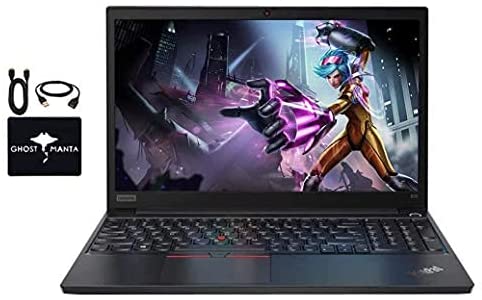
The second best trading laptop on my list – which is also amazing for photo editing – is the Lenovo ThinkPad E15, a balanced machine that allows you to easily track your investments, manage data and view graphics from its 15.6” FHD Display. Thanks to its 16 GB of RAM and its 10th Generation Intel i5 processor, you can relax after a hard day and play for a while, taking into account its modest Intel UHD Graphics. The average length of its battery is 8 hours. Unsurprisingly, it’s a bit cheaper than the device at the top of the list, around $1,000.
Features
A 10th Generation Intel Core i5-10210U processor with 1.6 GHz base frequency, it ups to 4.2 GHz with Intel Turbo Boost Technology, offering very good performance and full compatibility with the high memory speed of its 16 GB DDR4 RAM card. In addition, the Lenovo ThinkPad E15 incorporates Intel UHD Graphics that, although it does not offer a wild rendition, is enough for your activity. We also find 512 GB SSD with Windows 10 Pro as OS.
On the other hand, this business laptop has a backlit ergonomic keyboard with which typing will be super comfortable, and plenty of ports, with 1 USB 2.0, 2 USB 3.1,1 USB-C 3.1, 1 HDMI, plus 1 Headphone/Speaker/Line-Out Jack, and 1 RJ-45.
Specifications
Flip it open to reveal a 15.6” FHD (1920×1080) IPS Anti-glare LED Display, big enough to monitor stock values on a day-to-day basis. It includes a 720p webcam with ThinkShutter cover, which along with its biometric fingerprint reader and Trusted Platform Module complete the security options. The laptop has a sleek metallic design, available in black, in a structure that measures 14.5 × 9.7 × 0.7 inches and weighs 3.70 pounds. The battery of this aluminum device offers between 8 and 10 hours of continuous use.
3. ASUS ZenBook Flip 13

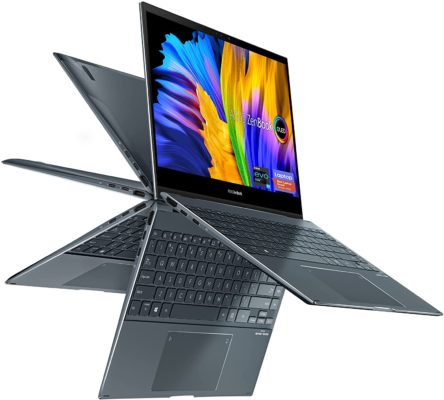
Sometimes you need another perspective when taking advantage of trading opportunities, and what can be better to do it than the best laptop for day trading that can also be a tablet? The ASUS ZenBook Flip 13 is a sturdy piece that performs remarkably both for trading and for real estate fields, that’s due to its powerful Intel Core i7-1165G7 processor, Intel Iris Plus Graphics, and 16 GB of RAM. It is the first device on the list with a 1 TB hard drive. Its 13.3” OLED FHD Touch Screen is perfect for taking fast notes and doing online trading whether you are professional or are looking to raise your skills.
Features
The ZenBook Flip 13 come powered with an 11th Gen Intel Evo quad-core i7-1165G7 which is up to 4.70 Ghz with Turbo Boost, 12 MB Intel Smart Cache, and integrated Intel Iris Xe Graphics GPU. Its storage includes 16 GB onboard LPDDR4X 4266MHz RAM and a 1 TB SSD that achieve multitasking and the opportunity to store any amount of data. Includes 1 USB 3.2 Gen 1 Type-A, 1 HDMI 1.4, 2 Thunderbolt 4, Wi-Fi 6, and Bluetooth 5.0. Its management is possible thanks to ASUS NumberPad 2.0 and a Backlit edge-to-edge keyboard, in addition to an ASUS Stylus Pen that will facilitate your transactions.
Specifications
Its 13.3” OLED Full HD 4-way NanoEdge bezel touch display offers detailed, high-quality visuals, under a maximum resolution of 1920 × 1080 pixels. The ultraportable design of this 2-in-1 device is Intel Evo Certified, also meets the US MIL-STD 810G military-grade standard. This ultraportable device weighs 2.87 pounds (1.3 kg) and measures 12.01 × 8.31 × 0.55 inches. It comes in a pine gray color and includes, in addition to the Stylus Pen, a Sleeve, USB-C to audio jack adapter, and a USB-A to RJ45 gigabit Ethernet.
4. Dell Inspiron 3000
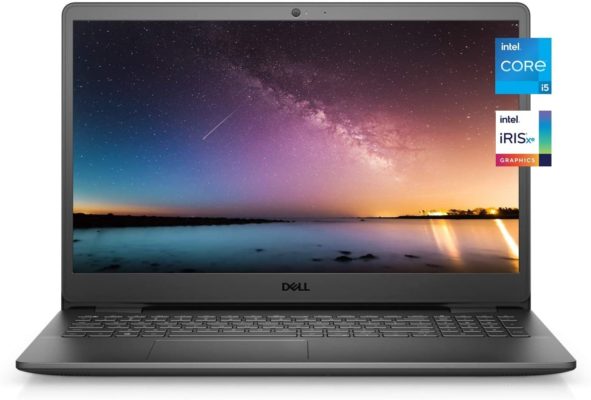
A huge part of the stockbrokers’ tasks belongs to the stock market, and this device is one of the best laptops for trading stocks due to its value-based pricing, around $760. The Dell Inspiron 3000 notebook comes powered by an Intel Core i5-1135G7 Processor, a 15.6” FHD display and offers the responsiveness of 16 GB of RAM and Intel Iris Xe Graphics, plus 1 TB of hard drive storage. Thanks to its specifications, it can become your trading station, making a difference in the way you buy and sell financial assets.
Features
With all the power and performance of the 11th Generation Intel Core i5-1135G7 Quad-Core Processor with 8 MB Cache, 8 threads, with a base Frequency at 2.4 GHz, reaching up to 4.2 GHz at Maximum Turbo Speed. Features Intel Iris Xe Graphics with Shared Graphics Memory, 16 GB DDR4 RAM, and 1 TB PCIe SSD. Comes with Windows 10 Home OS. It has a soft-touch Standard keyboard and a good-sized touchpad. 2 USB 3.1 ports, 1 USB 2.0, 1 Wedge-shaped lock slot, 1 HDMI 1.4b, 1 Audio Jack, and 1 SD Card Reader are available for connecting devices. In addition, includes Wi-Fi 6 and Bluetooth 5.1
Specifications
Its design has a slight angle of elevation that improves cooling, in which its 15.6” FHD (1920 × 1080) Anti-glare LED Backlight Narrow Border Display stands out, delivering outstanding visuals, we also find an HD camera with 1280 × 720 resolution. Its carbon black plastic structure measures 14.11 × 9.27 × 0.74 inches and its total weight is 3.93 pounds. The battery of this laptop can last for almost 8 hours of use.
5. Lenovo IdeaPad 5
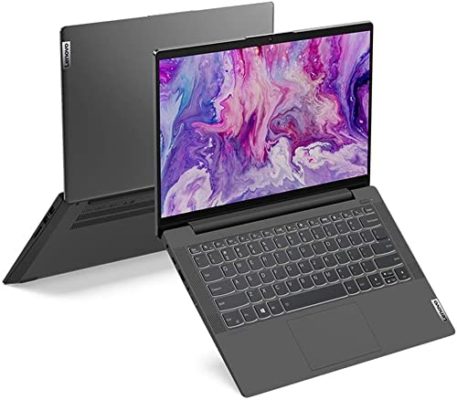
You need a laptop that allows you to keep up with trends, whether they are the Bear market or the Bull market, so my fifth choice is possibly Lenovo’s smallest best trading laptop. The IdeaPad 5 is a solid device with 16 GB RAM and 512 GB storage, Intel Core i5-1135G7 quad-core easily adapts to daily trading tasks and also incorporates Integrated Intel Iris Xe Graphics, all this is inside a conservative and classic design laptop.
Features
The notebook work under Microsoft Windows 10 Home (64 bit) Operating System, which is installed on its 512 GB NVMe M.2 Solid State Drive. An 11th Generation Intel Core i5-1135G7 Quad-Core Processor with 8 MB Cache, 8 threads, with a base Frequency at 2.4 GHz, reaching up to 4.2 GHz at Maximum Turbo Speed, Integrated Intel Iris Xe Graphics, and 16 GB RAM complete the picture. The laptop comes with Standard Backlit Keyboard, Speakers with Dolby Audio. Connection options for I/O include 2 USB 3.2, 1 USB-C 3.2, 1 HDMI, 1 Media Card Reader, and 1 Combination Audio Jack. Wi-Fi 6 and Bluetooth 5.0 are the wireless connections options.
Specifications
This Graphite Gray laptop has a not inconsiderable 14” LED-Backlit Anti-Glare IPS FHD (1920 x 1080) Display, assembled in a body that measures 8.56 × 12.65 × 0.82 inches and weighs 3.3 pounds. Includes 720p Webcam with Privacy Shutter and Fingerprint Reader for easy access. The device can work for a max of 6 hours without recharging its battery.
6. Acer Aspire 5
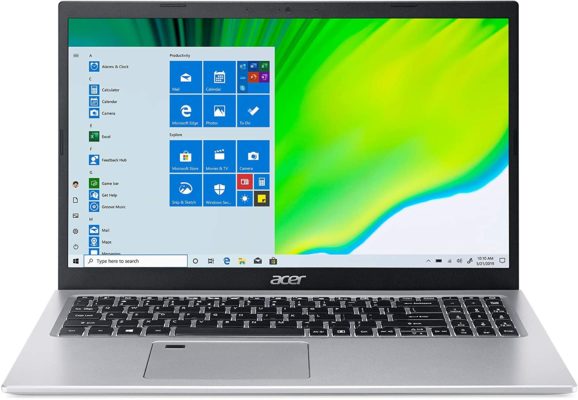
Another powerful machine to run software for trading cryptocurrencies, assets, or stocks is the Acer Aspire 5, a notebook that costs around $950. It has a 15.6” Full HD screen with Acer Color Intelligence technology that protects your eyes and improves visual appearance, and an external and internal design aimed at office workers. With Intel Core i7-1165G7 Processor, 16 GB DDR4, and 512 GB SSD, that together with its Intel Iris Xe Graphics make it a great alternative among the notebooks of the Taiwanese multinational.
Features
The Acer Aspire 5 has inside an Intel Core i7-1165G7 Processor that reaches up to 4.7 GHz, capable of 4 cores, 8 threads, and 12 MB Intel Smart Cache, the laptop also has integrated Intel Iris Xe Graphics for more optimal performance. We find 16 GB DDR4 Memory that allows you to keep numerous windows and applications open simultaneously and 512 GB NVMe SSD, so you don’t run out of space. You could use it through its easy-to-use Backlit Keyboard and smooth precision Touchpad, having the option of quick access by Windows Hello through its Acer Fingerprint Reader. It comes with plenty of ports, including 1 USB-C 3.2, 2 USB 3.2, 1 USB 2.0 Port, and 1 HDMI Port. It supports online connections through its Ethernet LAN RJ-45 port, Wi-Fi 6, and Bluetooth 5.0.
Specifications
Made with a plastic base covered in aluminum in which we find a 15.6” Full HD (1920 x 1080) IPS Widescreen LED-backlit standard screen, with a considerable balance of colors and bright enough to work comfortably. It is a device with a metallic and sober appearance, silver design with black details, weighing 3.63 pounds and measuring 14.31 × 9.39 × 0.7 inches, so it can be comfortably carried anywhere you need to work. Its battery is capable of providing up to 7 hours of productivity before you need to connect the charger.
7. HP Pavilion 15

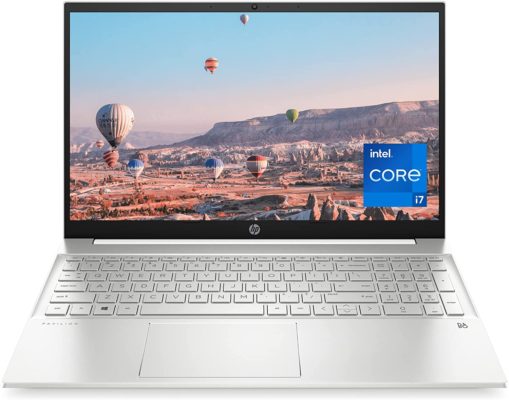
One of my favorites, with a vibrant design and amazing backlight keyboard is the HP Pavilion 15. It is possibly the best laptop for stock trading developed by Hewlett-Packard, by combining the latest 11th Generation Core i7-1165G7 processor, 15.6” diagonal FHD (1920 × 1080) display, Iris Xe Graphics, 16 GB RAM, and 512 GB SSD. The notebook delivers a solid level of processing, responsiveness and durability to carefully research and plan your trades efficiently, considering that you can buy it for less than $900.
Features
This budget laptop has an 11th Generation Intel Core i7-1165G7 which up to 4.7 GHz with Intel Turbo Boost Technology, 12 MB L3 cache, 4 cores, 8 threads), Intel Iris X Graphics, 16 GB DDR4-3200 MHz RAM for improved multitasking, and 512 GB PCIe NVMe M.2 SSD for fast storage. You can buy and sell shares in companies by connecting through your Wi-Fi 6 MT7921. Connectivity options with other devices include 2 USB 3.0, 1 USB 3.1, USB-C, and 1 HDMI port, microSD card reader, and Bluetooth 5.2. Chiclet keyboard and dual speakers with HP Audio Boost are also part of its structure.
Specifications
Its Natural Silver aluminum body measures 14.18 × 9.21 × 0.7 inches overall, including its 15.6” diagonal, FHD (1920 × 1080), IPS, micro-edge, BrightView, 250 nits, 45% NTSC display, with crystal-clear viewing quality, and an immersive HD 720p webcam. Available with Windows 11 Pro, the laptop is extremely well-built, weighs 3.86 pounds. The HP Pavilion 15 is specially designed for medium demanding tasks, delivering a battery life of around 6 and a half hours.
8. ASUS VivoBook 15

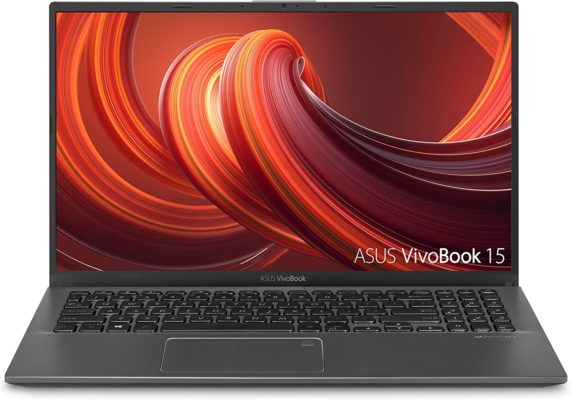
I know that one of the things that worries you the most in this field is the loss of money, but I assure you that this laptop is a good investment. If you need access to online stockbroker platforms, the ASUS’s best laptop for day trading – with a non-touch display – is Wi-Fi 5-enabled, and powerful enough, with 10th Gen Intel Core i5-1035G1, 8 GB RAM, and 512 GB SSD running applications quickly. Plus, it has a typing-friendly design and a spacious 15.6” FHD panel, so you can certainly monitor all the movements in the stock market.
Features
It comes packing a 10th Gen Intel Core i5-1035G1 CPU, 4 Core with 6 MB of Cache and reaches up to 3.6 GHz with integrated Intel UHD Graphics G1. It has 512 GB PCIe NVMe M.2 SSD to store content and 8 GB DDR4 RAM to perform different activities simultaneously without lag. The laptop comes with Windows 10, an Ergonomic Chiclet backlit keyboard, fingerprint sensor, easy-to-use touchpad slightly offset to one side, and some connectivity options such as 1 USB-C 3.0, 1 USB- A 3.0, 2 USB-A 2.0, 1 HDMI, and 1 Micro SD Card Reader. On the other hand, it lags a bit behind with Wi-Fi 5 and Bluetooth 4.1.
Specifications
Its exclusive Ergolift design for an improved typing position gives it a comfortable and delicate look, finished off with a gray brushed-aluminum surface. The ASUS VivoBook 15 stands out for its 15.6” Full HD (1920×1080) 4-way NanoEdge bezel display with a stunning 88% screen-to-body ratio, for a richer visual experience. It is an ultra-slim laptop, whose measurements are 14.1 × 9.1 × 0.8 inches, weigh only 3.5 pounds, and offers, in addition to the specifications that I have already detailed, an average of 8 hours of battery life.
9. Acer Swift 5
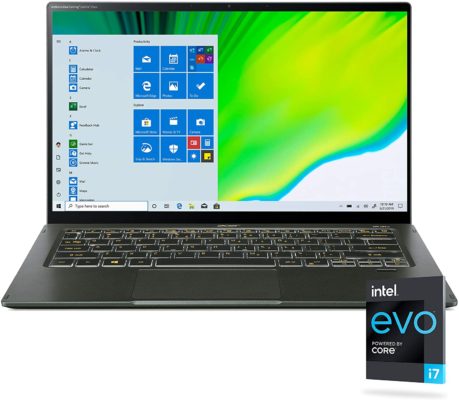
You must be up-to-date with the state of the financial markets, the flow and then apply the strategies to ensure better investments, so you can get profits, which is possible with the ninth-best laptop for trading stocks on my list. With an Intel Core i7-1165G7 Processor, 14” Full HD Touch Screen, 16 GB RAM Memory, 1 TB SSD, cutting-edge port selection and even fingerprint reader, the Acer Swift 5 is set to be the go-to tool for any day trader willing to pay $1,050.
Features
For the sake of performance, the Swift 5 presents Intel EVO 11th Generation Intel Core i7-1165G7 Processor 2.8GHz with Turbo Boost Technology up to 4.7GHz and 12 MB Smart Cache plus onboard Intel Iris Xe Graphics. Its 16 GB LPDDR4X Onboard Memory and 1 TB NVMe SSD deliver smooth full-rendition for trading apps and plenty of space to store files. With Intel Wi-Fi 6 for fast access to the web, I/O ports options like USB Type-C, USB 3.2 Gen 2 with Thunderbolt 4 support, USB 3.2 Gen 1, and HDMI 2.0 It also comes with Bluetooth 5.1. A backlit Keyboard and Corning Gorilla Glass Antimicrobial Touchpad allow you to input data and information.
Specifications
The Acer Swift 5 display is a 14.0” Full HD (1920 × 1080) widescreen LED-backlit IPS Acer CineCrystalLED-backlit TFT LCD with Antimicrobial Corning Gorilla Glass comes with integrated touch, 340nit Brightness, and 100% sRGB of color coverage, so it’s an outstanding panel. The laptop has a top-end design, with its Mist Green magnesium-lithium-aluminum structure measuring 12.56 × 8.15 × 0.59 inches, and weighing 2.31 pounds. It reaches up to 15 Hours of Battery Life, which means a lot of wireless work!
10. LG Gram 14Z90P
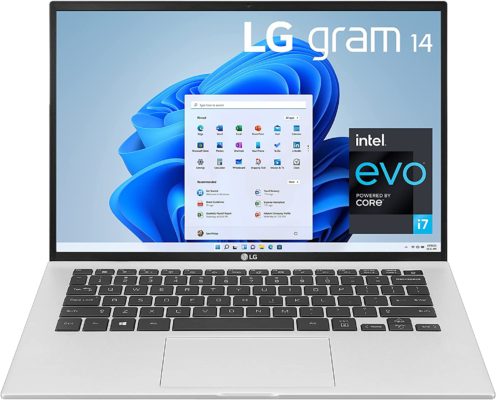
Another ideal laptop to keep up with statistical indicators and graphic studies is the LG Gram 14Z90P. It is made up of a powerful i7-1165G7 processor, with Intel Xe Graphics, 16 GB RAM, and 512 GB SSD. As you can see, performance and multitasking will not be something you should worry about. The best laptop for trading stocks of this brand costs around $1,200. With a minimalist design, a flat keyboard, a big touchpad, and almost fourteen-hour battery life, the LG Gram is intended for long online days trading tools working.
Features
The lightest Ultrabook is powered by an 11th Generation Intel Core i7-1165G7 Processor with Intel Xe Graphics. Its storage options include 16 GB LPDDR4X 4266mhz RAM that allows faster response times and 512 GB PCIe M.2 NVMe SSD to store information whenever you need it. Connectivity is guaranteed thanks to its 2 USB-C ports (Thunderbolt 4 support), 2 USB-A 3.2, 1 port, and microSD card reader. It also comes with Intel Wi-Fi 6 and Bluetooth 5.1. The keyboard on this laptop is backlit, it comes with a wide touchpad, fingerprint reader, and a very quiet fan.
Specifications
The display on the LG Gram 14Z90P is a 14” WUXGA (1920 × 1200) IPS LCD, with DCI-P3 99% color expression, a glossy panel with vivid color expression, and clear enough to function. One of the things I like most about this LG Gram laptop is its long-lasting battery, delivering up to 14 hours of autonomy, although it takes a long time to recharge. The dimensions of the device are 12.34 × 8.47 × 0.66 inches, with a weight of 2.2 pounds. This ultralight laptop is available in silver, with a full magnesium-alloy body built with an Up-Down Air Thermal Solution to keep air flowing for hours.
FAQ
Is 8gb RAM enough for stock trading?
Where Ram is concerned, the best laptop for day trading must have a minimum of 8 GB that’s if you are on a low budget. But if you have enough money to spare you must invest in getting at least 16 GB Ram, that way all your trading software will be able to run smoothly without any problems.
Can you day trade on a laptop?
This modern era of advanced technology has made all works easily achievable when we talk about stock trading, all financial markets these days are all accessible via the internet. This means that a laptop is one vital tool that one can use for day trading.
Which kind of hard drive do I need for day trading?
There are HDD and SSD, I recommend choosing a laptop with SSD as it boots faster and provides faster access to data. Also, any SSD above 256 GB is adequate, although if you can choose a laptop with 500 GB or even 1 TB it would be much better.
Is a MacBook Air good for stock trading?
The Apple MacBook Air is one of the best laptops for trading stocks, it has an amazing screen resolution of 2560 × 1600 that is perfect for viewing various stock images and graphics.
What is the best software for day trading?
There are many software products to mention, but we will only mention a few as follows: TD Ameritrade: Perfect for resources, Interactive Brokers: This is a good software for high volume traders, and E-Trade: Best for beginners to professional traders.
Conclusion
Now that you’ve come this far, I hope my list of the 10 best laptops for stock trading help to you, and you improve your performance as a stock trader. Good luck with all your trading!