
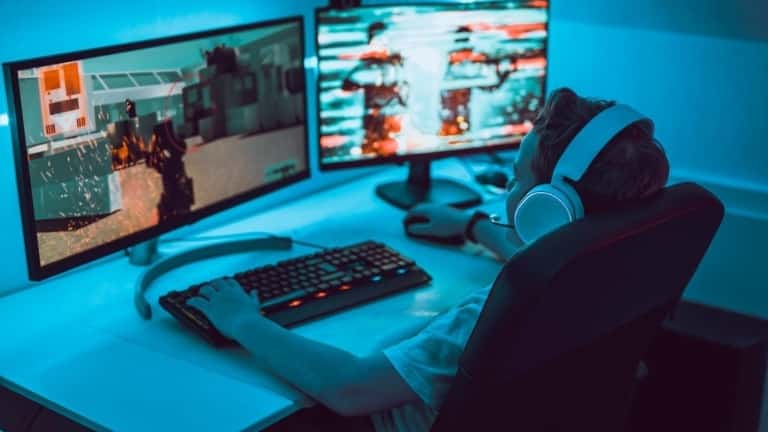
innovative gaming monitors is that users have a hard time figuring out what to choose. Finding the best monitors for fighting games can be a handful especially if you don’t know what to look for in particular.
What does a gaming monitor need in order to stand out?
Having a great video card with top-notch features may not be enough to run a game in full detail settings. To do so you will also need a monitor that functions at a high frequency. Frequency is what gives clarity and most importantly, fluency to video games. Currently, you have the option of getting either a 60Hz or a 120Hz monitor. The higher frequency will increase the price of the display but it will also provide double the refresh rate which is exactly what you need as a gamer. The best thing about high-frequency monitors is that your eyes will not be as stressed as with a 60Hz monitor. This is a great advantage to have considering how many hours gamers spend in front of the PC.
The user interface is another important aspect to focus on. You should narrow things down by choosing between IPS and TN. The second choice is more popular and the less expensive of the two. They come with great responsiveness and provide excellent brightness levels if combined with LED technology. The downside with TN panels is that some have issues when it comes to viewing angles and color distribution around the edges of the monitor. According to all gaming monitor reviews, the IPS panel which comes with newer monitors and provides a far better viewing experience without having any of the drawbacks of a TN display.
Top 5 Best Monitors for Fighting Games
1. BenQ GL2580H Gaming Monitor 24.5 inch 1080p

 Just as the name says, this is a gaming monitor above else. It comes with built-in technology which is destined especially for gamers. Unlike other displays, the RL2455HM is constructed to enhance the gaming experience.
It comes with an unbelievable 12 million: 1 DCR which in turn means excellent receptivity. It also incorporates options like the Black eQualizer, RTS Mode, Display Mode, and Smart Scaling. It is also one of the most affordable gaming monitors on the market which is quite unexpected considering its top-end features which also include innovative adjustability settings in terms of design.
Features
- Full 1080p HD Display
- Supports the following D-Sub, DisplayPort, VGA, HDMI, DVI x 1
- Slim bezel design from edge to edges
2. Dell P2418HT 23.8″ Touch Monitor

 The DELL P2418HT is the more extravagant choice. In terms of design, it looks different and offers a professional feel. It offers extended control options over the gaming experience and it delivers impeccable colors.
This LED-lit display is an amazing pick no matter the size of the diagonal. It comes with a special tilt stand that cannot be found on any other brand. You will be able to adjust the position of the display within the range of 55 degrees. The 178 degrees viewing angle is almost perfect. The speakers are built-in and provide impeccable audio experiences. This product provides performance and style while still being considered affordable.
Features
- 24-inch Display screen
- Touchscreen
- Full HD 1920 x 1080 Resolution
- AC 100/240 Volts power supply
- Weighs 6.88 pounds
- 178-degree viewing angle
3. BenQ ZOWIE XL2411P 24 Inch
BenQ has been around for a really long time. Their experience is definitely showcased with the XL2420TE which incorporates some amazing features. This is one of the most versatile monitors out there when it comes to mobility.
It can be adjusted in ways you never thought possible and it can do so while still providing an amazing refresh rate of 144Hz. It is recommended for those who spend more time facing the monitor than your average gamer. It comes with ZeroFlicker patented technology which allows your eyes to stay rested all throughout the gaming sessions and it also comes with Nvidia’s 3D vision which boosts visual impact. It also comes with intuitive RTS and QSD which also improve the video experience which makes it one of the top gaming monitors for CS GO.
Features
- Full High Definition 1080p Resolution
- 1ms Response Time
- Black eQualizer++
- Flicker-free Technology
- Faster 144 Hz refresh rate for the best performance
- 3 Years warranty
4. The Asus VS247H-P

 If you are searching for a sleek, stylish design we suggest checking out the Asus VS247H-P. It looks amazing and it provides excellent results while still being one of the most affordable monitors on the gaming market.
It provides Full HD clarity and has a 2ms response time which will deliver smooth graphics rendering. The design is innovative and space-saving mostly because of the built-in power adapters which allow Asus to manufacture the slimmest of displays. This monitor also includes technology like Smart View and ASUS Smart Contrast for a complete visual experience.
Features
- 1920×1080 IPS display monitor
- 23.8 inches Full HD screen
- 75Hz refresh rate
- 178 degree wide viewing angle
- Asus Eye Care technology
- Weighs 10.00 lbs
5. Dell E Series 23-Inch Screen LED-lit
Dell is the choice to make if you are looking for the most powerful gaming monitors. The E2414Hcomes with a high resolution and some of the most durable parts on the market.
If you know you will not be getting a new monitor anytime soon, this is the product to buy. Besides being an excellent choice in terms of price and durability, the Dell E2414H is also one of the few eco-friendly monitors you will find in stores. It meets all environmental and safety standards without putting a dent in your budget. This monitor has a cool refresh rate of 60Hz. Even though this may not be the best-looking display in terms of design, it is surely one of the most durable and efficient.
Features
- 23” monitor
- 1920×1080 Resolution
- Flicker-free screen for eye protection
- Supports both VGA and HDMI connectivity
Why pick a gaming monitor over a normal monitor?
Even though normal monitors are pretty advanced nowadays, the newest games have very high needs in terms of hardware. If you want to really enjoy a story and if you want to be pulled in the virtual world just like the game creators intended, you should invest in the best equipment possible. This will allow you to feel experience the lifelike images and videos which put together the gaming software.
Choosing the right manufacturer can be tricky especially with dedicated equipment. Some brands which have excellent products destined for generic use may not be as efficient when it comes to gaming gear. After going through many gaming monitor reviews and after thorough investigations some names have emerged.
We’ve taken it upon ourselves to pick the best manufacturers and select at least one of their gaming monitors so as you have complete freedom of choice no matter what your demands and preferences are. The following list is in no particular order whatsoever and has little to do with screen size. Most of the products below come in more than one size but offer the same features. Choosing the right size will be completely up to you.
Its time we said goodbye, and I hope you enjoyed reading our article for the best monitors for fighting games, take your time and pick one that will be of good use for your gaming experience.