
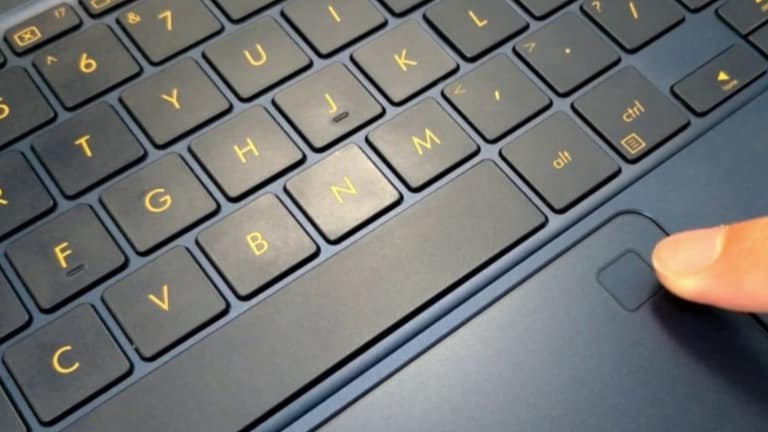
Nowadays laptops with fingerprint readers have been making screaming headlines. Almost 7 out of 10 students talk about laptops with fingerprint readers and their benefits. It is not a hidden fact that such laptops are damn good, neither is it a hidden fact that they provide you with 100 % security. If you wish to know the best laptops with fingerprint readers then continue reading. Before you get any bored today I will review some of the best laptops with fingerprint readers.
You can leave your laptop anywhere and your data and other files will still be secure because no one will have access to them because your fingerprint is what will be required to open the laptop.
Passwords or pins are effective but not as effective as fingerprints because passwords and pins can be easily known by one who is very good in social engineering or a professional hacker. And typing in your password or pin every time can be stressful.
Fingerprint readers make things very easy. They are safer and quicker. The only thing required is for you to touch the reader with your finger and you are good to go, you instantly have access to your laptop
Fingerprints do the things without a doubt, they are not expensive and anyone and everyone can afford I must say, they provide value for your money.
Having said that, it is on our agenda today to look at the very best laptops you can get with fingerprint readers. I will give you more than 5 and that will give you enough room to choose what best suits your needs, preferences and budgets.
Factors To Consider When Choosing The Best Laptops With Fingerprint Readers
Hold on a little as we first look at what to consider when getting a laptop with a fingerprint reader.
CPU
This is simply the brain of your laptop. This is what determines how fast or slow your computer runs. If you purchase a computer that has a CPU that is slow then it will take more than forever to load software and applications thereby making all your activities very slow and unbearable.
RAM
This is what is considered as the memory of your laptop which works in tandem with the central processing unit and it gives your computer nothing but great speed. It enables you to multitask without lagging behind, therefore it is important that you get a laptop that has enough RAM.
Storage Space
It is not very vital but it still remains vital. You will need to have storage space that is enough for all your files, data and documents but it can be remedied with an external hard driver is there is need of more storage space. Its importance cannot surpass that of RAM and CPU but do note that having a hard drive with enough space is a necessity least you overlook it and will cry foul in the end.
And now we look at the laptops on our agenda for the day today
- Asus Vivo Book F510QA
- ASUS Vivo F510U
- ASUS Zen book
- Dell XPS 13 9630
- Huawei Mate book x
- Acer Swift 3
- Acer spin 3
- Dell Vostro
Top 8 Best Laptops With Fingerprint Readers 2020 Reviewed
At this point, we unveil each one of them and give you all there is to know about them.
1. Asus Vivo Book F510QA

 It has sleek and modern looks. Its outlook has a gunmetal gray color that looks and is very attractive yet unique. It has a plastic enclosure that is rigid and thin. It also has a textured lid that feels like a lenticular lens, it has a corrugated surface that allows an image to change but this is dependent on the viewing angle that is being used.
It is a 15.6-inch full HD, an LED backlight display that is able to produce vibrant and sharp images though it does not give you touch support. Sadly, its viewing angle is not wide enough as it would be expected.
Asus Vivo Book F510QA has excellent connectivity ports including USB 3.1, type -C port, USB 3.0 and HDMI among others. It also has bottom firing speakers that produce passable audio that is not available in the bass department, but it is enough to fill a small room, it is thus very ideal for video conferencing and YouTube videos.
Its processor and RAM will enable you to multitask with a number of applications the same time. It has an 8GB of RAM and its processor is an AMD QUAD CORE A12 9720 processor.
Unfortunately, the systems cooling fan kicks on when one opens a lot of applications in the background accompanied by one streaming live video. But it is not overly obnoxious and loud yet you can still notice it.
One of its gray sides is that it can only last for 6 hours 43 minutes therefore if you plan of using it for more than 6 hours wisdom demands that you carry an umbrella.
Other than that, it will give you a list of features so that you know what it is made of. This laptop has its own downsides for your health. It has not been equipped with a. backlight. It comes in a 15 inches notebook that has downsides. It has keys that give you a narrow travel and at the same time helps you to maintain being firm.
Its touchpad feels a bit downsized but it is responsible, it fingerprint reader is on its top left corner of the touchpad.
Features:
Processor AMD 12 970 P 4cores, 2MB cache 2.7 graphics 156 FHD wide view, storage 256 GB M M.2 SSD, graphics AMD Radeon.
2. ASUS Vivo F510U

 It has a short battery life .it can only last for about 5 to 7 hours straight with a single. It is one of the cheapest laptops you can find with fingerprint readers.
Its performance has been built mainly for graphics intensive applications and basic usage. It has the latest generation CPU and it is good I must say. It also has the latest RAM generation that has the ability to increase your CPU speed.
Unfortunately, it has a storage of 5400RPM HDD and this is actually the slowest storage drive you can find on the market. But it has an advantage because it will give you adequate space for you to be able to store all your data but if you are storing 1080p videos it might not necessarily work.
It has a beautiful display it has an IPS screen that gives you good color accuracy and is able to deal with extremely high viewing angles with an entire full HD resolution.
As I earlier alluded it has a decent battery life that can go up to 7 hours that is when you are internet surfing and using light applications like Microsoft office but then when you are running intensive multiple applications it can go up to 5 hours only.
It only weighs 3lb. and well I can tell you that that is bearable according to me. Its fingerprint sensor is very accurate especially when your finger is not sweating.
Features:
CPU intel core i5 8th Gen 8250U /1.6GHz, RAM 8GB DDR4 SDRAM, memory 32GB, hard drive 1TB HDD, battery life 5to 7 hours.
3. ASUS Zen book

This is a giant all because of its huge battery life, it can go up to 11 hours with just a single charge. Even before we go yonder do note that this laptop is expensive.
It has pretty much flawless features but it does not have any dedicated graphics card that makes it a challenge to do activities that are highly graphical.
It has a go build quality and it is entirely made of metal but then it has a small screen size and it has a better design weighing up to 2.6lb. It is actually lighter than a MacBook Air which is considered the lightest Ultrabook.
It has a full HD IPS panel that has a lower screen size and this screen size and its SSD are what enable the laptop to reach about 11 hours.
Meanwhile, its fingerprint scanner has been built to accurately recognize your identity and it gives no issues at all and if need be it has enough room for your external storage as it is not upgradeable in terms of storage.
Features:
13.3-inch anti-glare FHD 1920 X1080 display ,8th Gen intel i5 8250U 1.6 GHz processor, memory 256 GB SATA 3 M.2 SSD 8GB LPDDR3 RAM.
4. Dell XPS 13 9630

This baby does not only have a fingerprint reader but also has a touch screen. This is also similar, with the ultra Asus Zen book.
Its battery can go beyond 10 hours. It is a full HD IPS panel that has a zero-light bleed.
Its touch screen is actually and energy-draining touchscreen. It is only 2.7 lb. and can be carried even in your briefcase. It is slim and has an infinity edge display.
This laptop has been crafted with machined aluminum that has a soft touch carbon fiber. It has a variety of ports that make your connectivity very easy, you can do many things at once.
Features:
Processor core i5 825 0 3.4 GHz, Intel HD,128 GB SSD, TN full HD 1080 p touch screen,8GB RAM DDR3.
5. Huawei Mate Book X

 It is a 14-inch display that has a gorgeous design. It has a battery life of 6hours which is quiet descent but could get better, but when its brightness is reduced then it can go up to 8 hours of usage. It is especially flawless in terms of its design and performance.
Its fingerprint reader is unique and is second to none when compared with other laptops.
It has a storage capacity that is very high when compared with other laptops, it has about an SSD of 512 GB and it is extremely lightweight and is thin but sadly it does not leave room for you to make any upgrades.
This laptop weighs 2.3lb. and has zero plastic and has its entire body made of aluminum.
It has a RAM of about 8GB that is good enough for any application but the application should not involve video editing or even 3D Modeling.
Its display has great resolution. Its fingerprint sensor is at the top right corner of the keyboard, it can also serve as a power bottom.
Features:
Processor core i7 8250U 3.5 GHz, 8GB RAM DDR3 intel HD ,512GB SSD, resolution 13” 2160 x 1440.
6. Acer Swift 3

 It has a keyboard that feels better than Apple’s 12-inch clamshell, it is brilliant and has an attractive backlighting and it has four levels including off.
It has amazing ports including two USB 3.0 port and also an SD card slot. That is not all there are more ports to it than what has been mentioned.
Apparently, it has some grey areas with its audio, it does not have good sound at all. It has performance almost the same as that of an ASUS. It has an 8th generation CPU that has a clock speed of 3.4 GHz that keeps RAM technology and its amount.
It has a SATA III SSD and this is able to make you boot up your laptop within just a few seconds compared to those laptops that take minutes to boot when they are using a regular HDD storage.
The screen is 15-inch IPS panel with a complete full HD, it is a little heavy and has a chassis entirely made out of metal rather than plastic. It moreover has. Large screen and a battery life of 10 hours.
Features:
CPU 2.5 GHz intel core i5 7200U, graphics intel HD graphics 620, RAM 8GB DDR4 SDRAM, screen 14inch FHD, storage 256 GB SSD.
7. Acer Spin 3

 It has a windows 10 home operating system and has been built with a clear and loud audio.
It comes with a very effective fingerprint reader that allows you to enjoy a high level of biometric security that has an advantage of not allowing unauthorized users from accessing your laptop.
It has been equipped with an 802 .11ac wireless connection that makes sure you have hassle and faster loading on your web. Plus, it can accommodate several ports like USB 2.0 and USB 3.0 for your convenience.
It houses a lithium ion battery that can go up to 12 hours with just a single charge. Its chipset has maximum clock speed that goes up to 4.6 GHz which can effectively perform a variety of activities without any hiccups.
Acer spin 3 has a processor that has 16GB RAM and also a 512 GB PCle NV Me solid state that is very impressive especially seeing at how much it is being sold for.
It is an ultra slim laptop that can be swiftly slipped into a bag probably a flat one without putting in much effort.
It has a lid that gives you convenience of about 360 hinge and with this you can work on the system by maintaining a position of your choice. It is a 14inch full HD IPS display that provides you with multi touch convenience. But the only drawback is that its plastic build, but all in all it has been built to give you a thrilling experience and you will get nothing short of excellence.
Features:
Hard drive 512 GB, RAM 16GB, processor 8th Gen intel core i7 8567U, graphics intel UHD graphics 620.
8. Dell Vostro

 Its keyboard does not disappoint. Its keys give you a tactile feeling that is very comfortable and it does not take you much time to get used to it, just a few hours and you are good.
It also has a backlight that has both low and high brightness settings, it can be adjusted according to your desires. It has a bright and beautiful screen.
It has a 15.6-inch glossy 4k touch screen and with it you can easily read text even outdoors or in the office. With this image have a lot of color pop saturation and even contrast. With this, you can even watch Netflix in 4k and HDR.
But this laptop falls short on sound. Its speakers do not have very good sound. It is a very good high-end gaming laptop and has amazing design with uptight security. It has an intel i7 processor accompanied by a 16GB RAM memory, it also has a 512 GB SSD that makes your running windows and other apps extremely quick.
Read: Best Laptop Cooling Pad For Gaming
Features:
Processor intel core i7 8850 H, graphics GeForce GTX 1050 Ti with Max Q, RAM 32 GB, display 15.6-inch UHD 3840×2160, storage 1TB SSD PCle.
Conclusion
I guess we have now reached the end of the article, all the above are our top recommendation for the Best Laptops With Fingerprint Readers you can find on the market. So choose wisely, all the best!